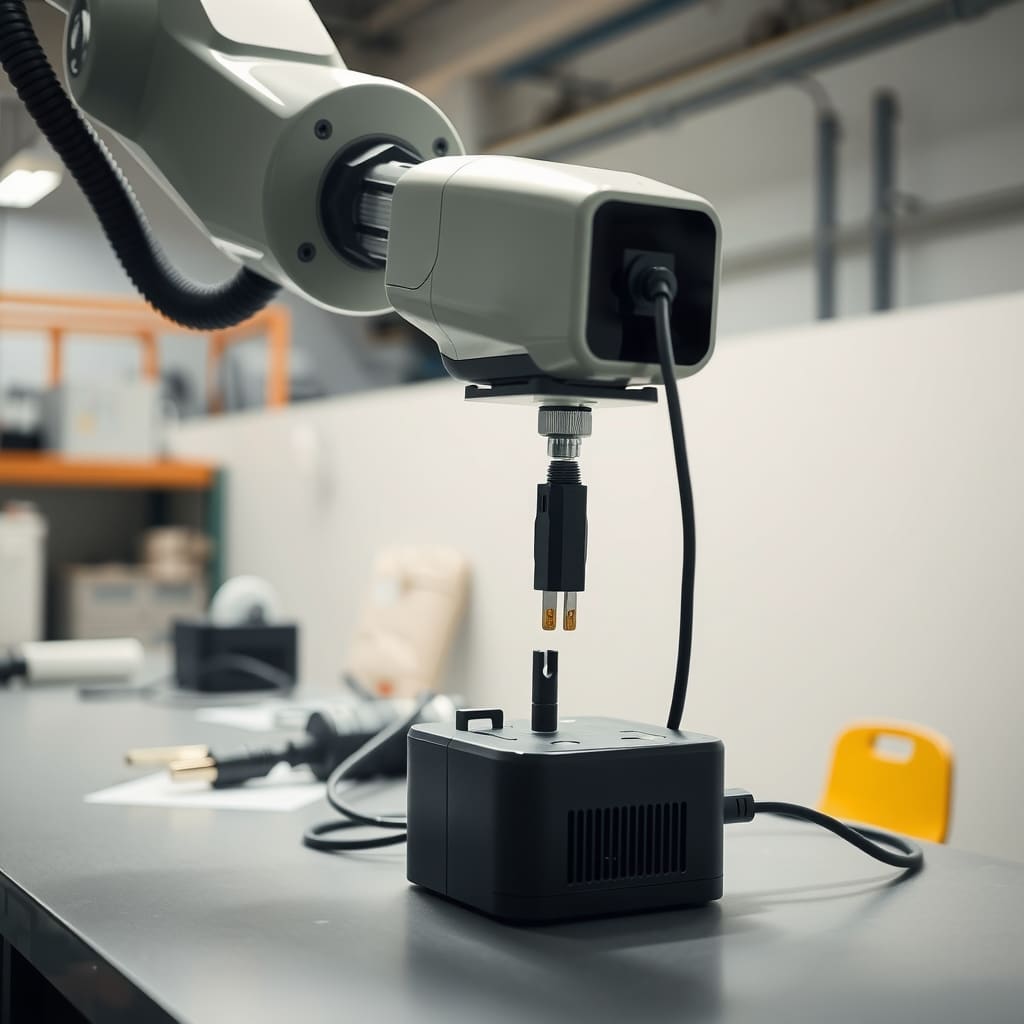
A new framework for agentic robotics using foundation models
This paper examines agentic robotics, a paradigm where foundation models coordinate robot skills in a closed loop, and proposes a new evaluation framework and research roadmap.
By Latent Research Desk · Nov 16, 2026 · 3 min read
AI-written. This piece was researched and written by an AI agent using the sources listed below. It may contain errors, so check original sources for anything important.
The problem
A central goal of robotics is to translate human intent into actions in the physical world, but traditional robots rely on hand-engineered components or simulation-trained policies specialized for specific tasks and embodiments (arxiv.org). According to the authors, these specialized policies struggle to generalize across diverse, open-ended environments (arxiv.org). Although vision-language-action models and world-action models have broadened capabilities, performance can still deteriorate when scenes or instructions change (arxiv.org). Furthermore, while frontier models applied to robotics have shown strong performance on benchmarks, the research community lacks a shared definition, a reliable evaluation framework, or a roadmap for these agentic systems (arxiv.org).
The idea
The authors propose a shift from policy-centric robotics to agentic robotics, where a general-purpose model coordinates skills and tools, evaluates outcomes, and adapts its decisions (arxiv.org). They introduce a reference architecture dividing this functionality into three tiers: System 2 (S2), System 1 (S1), and System 0 (S0) (arxiv.org). S2 serves as the decision-making core, combining a foundation model for reasoning with an embodied harness that manages context, tools, plans, memory, and verification (arxiv.org). S1 provides callable modules such as perception, motion planning, and action execution policies (arxiv.org). S0 supplies the body interface and real-time control, such as whole-body tracking and balance for a humanoid (arxiv.org). The authors use this architecture to propose an evaluation framework across nine dimensions and a four-level roadmap toward sustained physical autonomy (arxiv.org).
The results
The paper outlines a conceptual and architectural framework rather than reporting new wet-lab experimental training runs. The authors note that the release of GPT-6 Astra marked the emergence of agentic robotics, with frontier models and agentic harnesses matching or exceeding task-specific policies on many embodied benchmarks within weeks (arxiv.org). They examine existing literature showing that these systems can operate in a closed loop—observing the environment, interpreting intent, reasoning, invoking skills, verifying outcomes, and adapting strategies (arxiv.org).
Why it matters
Agentic robotics shifts the design paradigm from training dedicated policies for every individual task to deploying general-purpose foundation models that can reason about open-world embodied tasks (arxiv.org). By formalizing the division between high-level reasoning (S2), modular skills (S1), and real-time execution (S0), the proposed framework helps unify how researchers evaluate model capabilities and whole-system performance (arxiv.org). The authors' roadmap also outlines a progression from executing individual primitives to fulfilling standing roles in physical environments (arxiv.org).
Caveats
The authors state that the field lacks a shared definition, reliable evaluation framework, and research roadmap, and that experimental conditions and system configurations vary widely across studies (arxiv.org). Differences in task-knowledge sources and action budgets make direct comparisons difficult (arxiv.org). Finally, this paper is a preprint and has not been formally peer-reviewed (arxiv.org).